Hello Reader,
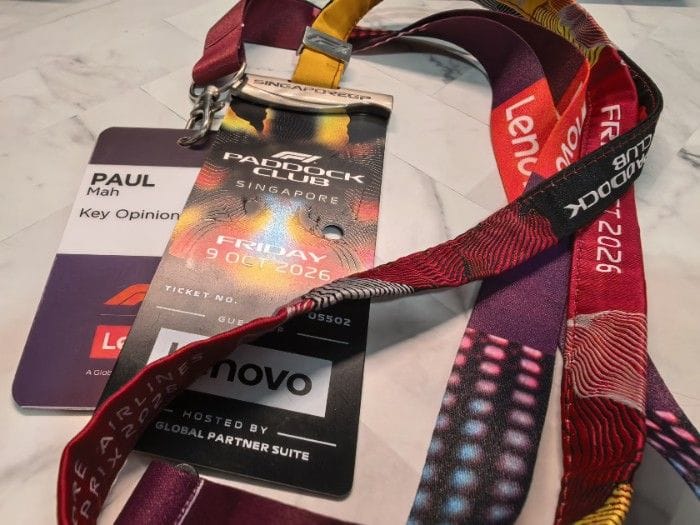
This week passed by too quickly. Among others, I gave a presentation to the partners of a semiconductor giant on Monday and dropped by the Singapore Grand Prix 2026 on Friday. And oh, the preview trailer of my three-part podcast series with Micron is out!
Today, I want to talk about the unspoken stories behind the news, and how businesses are using AI - and what it means for the future.
The unspoken stories
Last week was a whirlwind week where I had the chance to speak with scores of data centre insiders. What I love about meeting professionals in the line is the differing perspectives, insights - and information that I might not otherwise be aware of.
For instance, you are probably aware of the news of Thailand hitting pause on data centres. Turns out that it was largely caused by the public furore over the actions of a data centre operator in Bangkok that allegedly stored more than 200,000 litres of diesel without a permit.
Here's the thing that has never changed, back from when I talked to the lead involved in investigating the Singapore Exchange (SGX) crash of 2014. Yes, I wrote about it using details from the published report; but I still remember his criticism of how it should not have happened - which was the unspoken story he swore me to secrecy over.
This week came news that the Nvidia-backed Firmus IPO has been abandoned just days after the firm signalled healthy demand, not too long after I texted the co-CEO a note of congratulations. Bloomberg says its struggles underscored investors' polarised views on the deal, with some worrying about the valuation.
My friend, an extremely well-paid contributor at a financial platform who is bullish on AI, was adamant that management botched the IPO. I don’t know enough to form an opinion, though I do personally expect AI demand to surge. What do you think? What do you think is the real story behind it?
Who is using AI
I guess this brings us to the question: Who exactly is using AI today? According to Fan Ho, vice president and general manager of Lenovo's APAC Solutions & Services Group, top business users hail from the manufacturing and logistics sector, though hospitality and contact centres are not too far behind.
The reason is less about shiny tech and more about pain, as Fan explained to me when we met on Friday, just before heading over to the races. Factory floors and warehouses have long struggled with rising labour costs, younger workers who want nothing to do with “dirty and difficult” jobs, and safety inspections that quietly get skipped.
The solution? Put a camera on a robot dog for a traceable record. And what struck me was how Lenovo’s own warehouse has no lights, because the robots that are quietly and efficiently shuttling pallets around don’t need them.
Which brings me to hybrid AI, which increasingly looks like the future of AI. I’ll be honest that I dismissed it as vendor-speak when I first heard of it from Lenovo earlier this year. Fan did observe that it depends on the industry, noting that banks will need it if for nothing more than data privacy.
But it is useful in the factory too, where the issue is response time. A robot arm cannot wait on a round trip to the cloud, and neither can an inspection dog halfway up a flight of stairs.
So what does all this mean for the future? Will AI and robotics take the jobs nobody wants, and the humans move up the chain to decide what the machines should be doing?
See you around
I'll be at the Microsoft AI Tour Singapore on Monday, and at GovWare on Tuesday. Do drop me a note if you are there and would like a quick catch-up.
As usual, you can reach me by replying to this email. You can also DM me on LinkedIn.
Regards,
Paul Mah