Hello Reader,
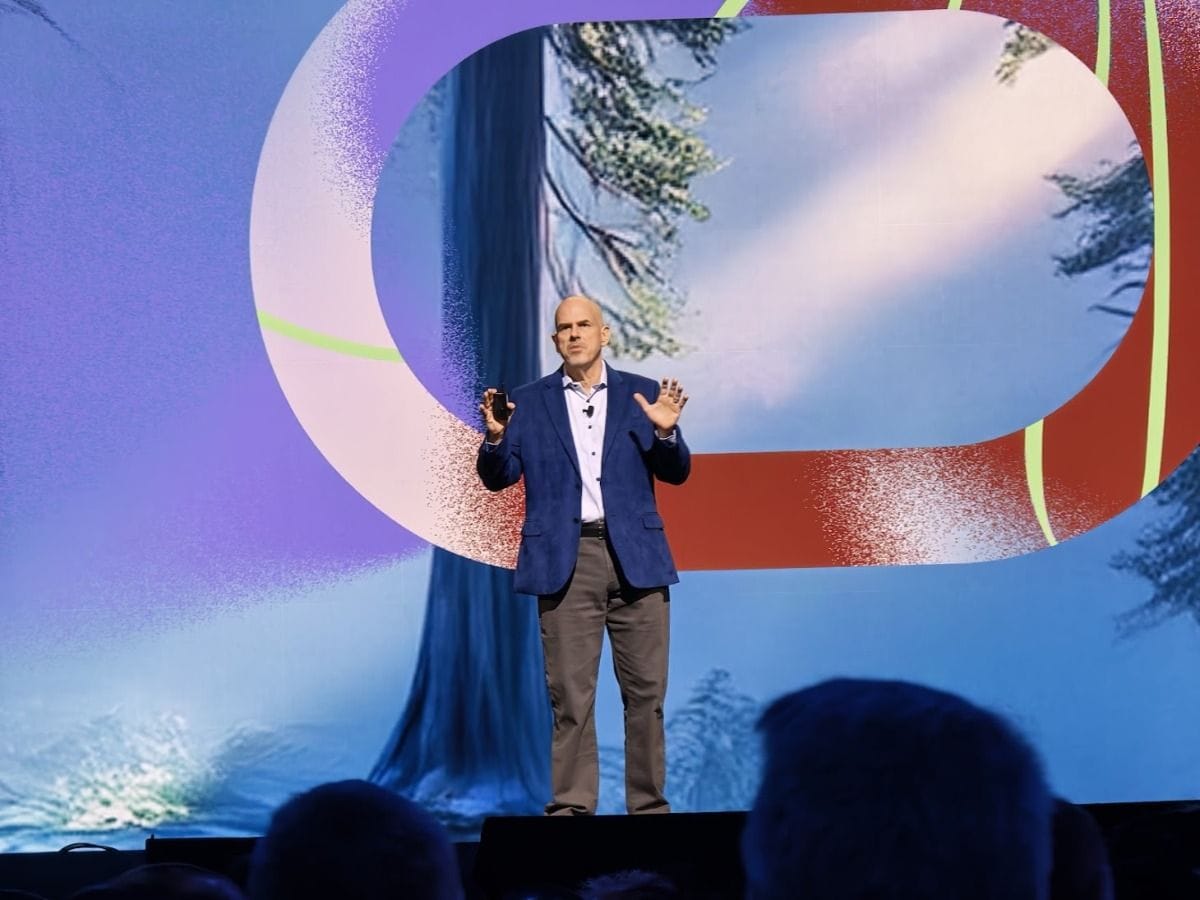
I was in Vegas earlier this week for the annual Oracle AI World. While they take up a significant chunk of time, such trips do give me the opportunity to gain a far deeper sense of where tech is heading.
And oh, I was also pleasantly surprised when a Tech Stories subscriber who works as a US-based analyst came up to say hi. Great to meet you, Alan!
Today, I'll talk about Oracle's inroads with AI and how Microsoft is integrating AI into everything.
Oracle's goes all in on AI
Much like “Internet” and “cloud” before it, it didn’t take long before every organisation under the sun started calling itself an AI company. And as it became clearer just what AI could do, the predictions got gloomier. There was talk of a SaaS apocalypse at first, and then it was enterprise software’s turn, with traditional enterprise IT singled out as the most likely casualty.
But that assumes an unwillingness, and an inability, to change. Neither is true of Oracle, an IT titan with deep inroads into the largest firms in the world.
Sadly, the incredible buildup of data centres that Oracle is leading got only the briefest of mentions, so I didn’t manage to pry into its Batam data centres. What Oracle wasn’t shy about was the profusion of AI capabilities it is weaving into a full range of its software.
Demo after demo underscored just how deep that integration goes in the enterprise. And with AI tools in hand, forward-deployed engineers can now deliver results in weeks instead of years.
But it was really the media interviews that demonstrated how deeply Oracle has committed to AI.
Juan Loaiza, executive vice president at Oracle Database Technologies, definitely didn't speak from a script. "People think that AI is this magic box,” he said. “But we have to go through this whole learning cycle.”
Building used to be the barrier in IT, Juan noted. No longer. With prototypes taking the place of lengthy requirements documents, he now spends most of his time on trust and cybersecurity. On the latter: “[Cybersecurity] is very scary. It is scarier than most people think.”
Having kept reasonably up to date on that front, as well as having tried the frontier models myself, I must say I fully agree with him.
"The way we work has changed," he said.
How Microsoft is integrating AI into everything
I’ll admit that when I went into the Microsoft Frontier Tour in Singapore last month, I was expecting the usual. A keynote, some demos, and lots of aspirational sharing about the future of AI.
That’s not what I got. Instead, I caught a glimpse of Microsoft’s vision for AI-powered transformation, complete with fully integrated, highly functional AI capabilities that organisations can use to transform themselves completely.
Read more about Microsoft’s Frontier Transformation here.
Two examples stood out:
- A developer built an invoice-checking agent, deployed it, and ran an evaluation. It scored 63 percent initially. He tuned it to 100 percent, then swapped the frontier model for a much smaller fine-tuned one. Same score, but at $20 instead of almost $800.
- A sourcing manager asked Copilot to shortlist suppliers. It pulled data in, read the audit reports in her email, scored the bids against the company’s own process and wrote the results back to the ERP.
What surprised me was how tightly integrated Microsoft's AI capabilities were. It had built Copilot capabilities into both existing and new apps, with full admin controls.
Of course, it is not perfect. While the basic Copilot plan works natively with all the apps within the Microsoft ecosystem, more powerful capabilities such as MCP and advanced integration will require Copilot Studio, which costs extra.
The hard part still falls to the business: deciding which process to redesign, getting data in order, and building it. What’s changed is that the scaffolding no longer has to be built from scratch. The governance, the cost controls, the evals and the integration are already there, waiting to be picked up.
The day after tomorrow
The road ahead might be bumpy, but I suspect most of the IT giants will still be around the day after tomorrow. In fact, some might even pull up further ahead.
What do you think? I look forward to hearing from you.
Regards,
Paul Mah