Hello Reader,
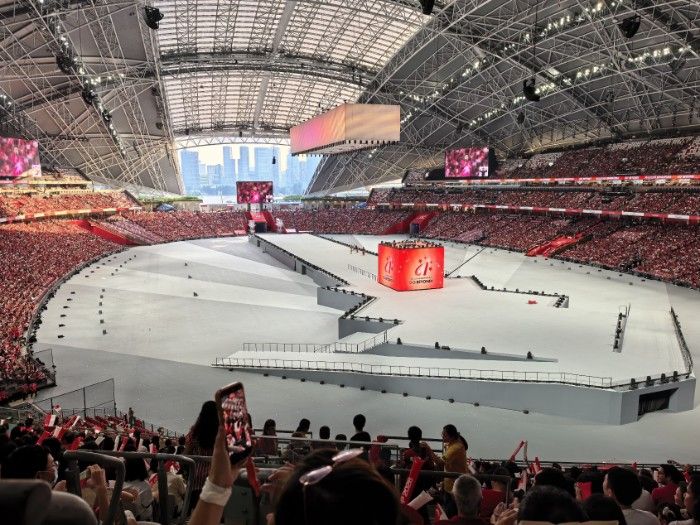
Today is Singapore's 61st National Day. For many, this means overseas trips or time with family. Where did you go? What is happening in your part of the world?
Today, I want to talk about the next wave of data centres in Southeast Asia, as well as how AI will change things in unexpected places - and how software engineering will change yet again.
More data centres coming
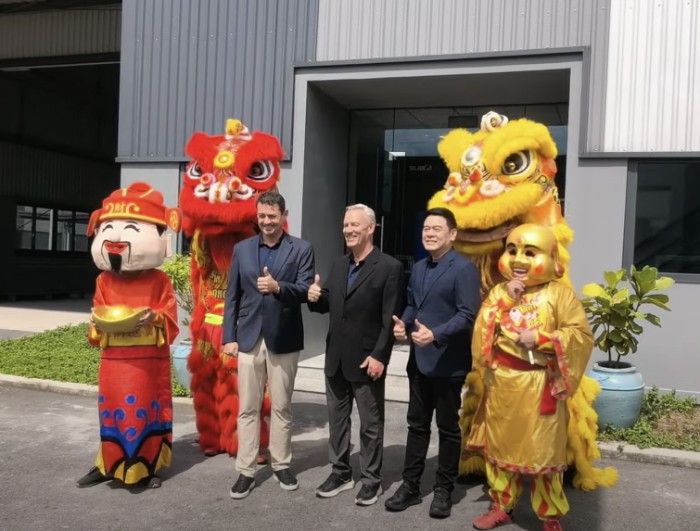
In case you haven't heard yet, neocloud juggernaut CoreWeave this week announced its expansion into the Asia Pacific. And of all places, it's building 360MW of data centre capacity in Indonesia - which two sources tell me will be in greater Jakarta.
The news caught the data centre industry here by surprise, given both its sheer size and the speed of completion. Most had not heard a hint of it before the announcement broke.
The move will surely spur renewed interest in the growing ranks of neoclouds in the region. And for Southeast Asia, this might be the validation that the region is now ready for AI prime time. In short, more data centres are coming.
From unexpected to normalised
We went out to celebrate my mom's birthday this weekend. Turns out that one of my brothers was also dabbling in Claude Code. What was he using it for? To pull more data from the MCU of his bike, which he accessed through an aftermarket kit that he's expanded through reverse engineering.
He has also requested developer access to the On-Board Unit (OBU) used in Singapore for electronic road pricing, using the official software development kit (SDK) to build companion software for it.
My point is: while you hear a lot about how people are using AI to make prettier slides or work more efficiently, tech-savvy users and developers are using it to go much further. AI is now allowing them to work on projects they might not have been able to attempt in the past.
In the meantime, I've added WhatsApp support into the personal Planner app that I've been working on. I might have gone slightly overboard for this one, but the ability to search through my 880,000 messages using AI was too enticing to pass on.
By using "embeddings", the plan is to add in the ability to ask questions such as:
- Who did I agree, via message, to meet this week?
- What was that place in Tiong Bahru someone recommended.
- What was dad worried about last month?
Fascinating times indeed.
Napoleon and software engineering
Finally, a piece of content I read this week got me thinking about the future of software engineering. Written by Chang Sau Sheong, the deputy Chief Executive and CTO at GovTech, it looks at how AI is turning agile software squads into teams of one.
Sau Sheong compared the agile era to Nepoleon, who he says kept winning early on due to how he organised his army into independent corps that could move quickly. Because his opponents were slower and more centrally controlled, Napoleon often outmanoeuvred them before they could react.
Of course, AI has now shrunk the agile "squad" into a team of one person directing multiple AI agents. The human becomes less someone who writes all the code and more the commander of a small "software corps."
Perhaps this is where “every company is a software company” becomes literal. Domain experts across the business could increasingly build their own software with AI agents, while engineers provide the platforms and guardrails underneath.
What are you building today?
Regards,
Paul Mah