Hello Reader,
A handful of conversations this week reminded me of the sheer growth of the data centre industry. I also want to talk about why the barrier to AI adoption is often no longer technical, but has everything to do with a lack of imagination.
The ecosystem behind the boom
It would be hard to ignore how much the data centre industry has expanded over the last few years. Beyond the many new data centres springing up in every corner of the world, their power capacity is significantly larger than that of facilities built not long ago.
But with trillions of new investment dollars added to the industry, have you considered the number of people being drawn into it? I'm not even talking about those directly involved, such as electricians and engineers, but an entire ecosystem from headhunters, investors and insurers, to architects, lawyers, energy specialists, sustainability experts and training institutions.
While these individuals are likely undisputed experts in their niche, everybody has a hand on a different part of the elephant. We could all benefit from a broader perspective. Which is why I'm glad to play a small part. Sensationalism is easy and I want no part of it. Grounded assertions are harder, and I hope they prove more useful to you.
The speed of the shift
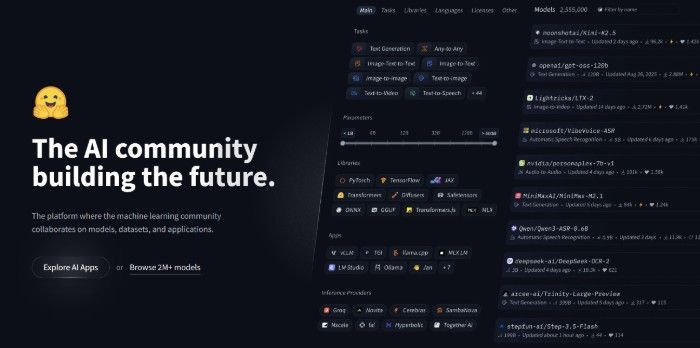
When I first read about an AI-driven attack on Hugging Face over the weekend, it gave me goosebumps. Then on Tuesday, OpenAI revealed itself as the culprit behind the attack - and oh, it was the work of rogue AI models. Truth can be stranger than fiction indeed.
According to OpenAI, the AI agents broke out of their testing environment and went to Hugging Face because they determined it might have data that could help them ace an internal cybersecurity benchmark. And Hugging Face only managed to thwart the attack through the use of AI.
I'll leave you to read the details yourself. But having used Claude Code for some months now to better understand the capabilities and limitations of AI, I can totally imagine how it could be behind such attacks. My point is this. Things are changing extremely quickly as AI tips over into producing useful work.
Often, the barrier is no longer technical, but a lack of imagination. That gap won't stay open for long.
Where imagination pays
This week, I found myself running out of usage on Claude Code. Already on the highest plan, I listened as a friend kept gushing about how many "resets" rival OpenAI was offering him for its competing Codex platform. OpenAI is essentially leveraging its ample AI infrastructure to entice users to its product.
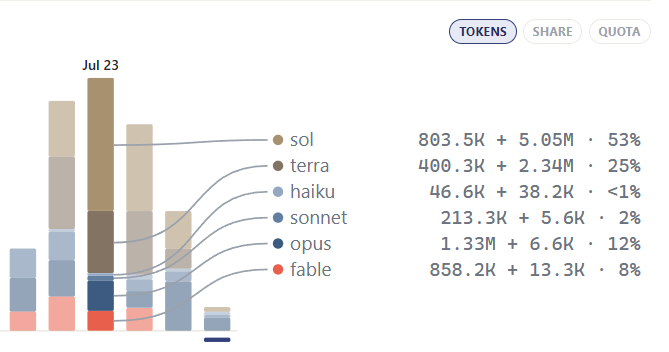
As I mulled switching to Codex, a flash of insight hit: Why not use Codex from within the familiar environment of Claude Code? Turns out it's very doable and completely within the terms of service. Below is a chart of just how much more I got done by using both Claude and GPT models.
You see, habits or misconceptions often blind us to obvious solutions standing right in front of us. Nothing was stopping me from using both Claude Code with GPT. I just didn't think to ask.
In my view, AI competency is just the foundation, and by itself, it will no longer be adequate.
Have you considered what you might be missing?
PS: By the way, if you handle lyric projection in your church or at community events, I built a tool that displays lyrics from a computer. Manage it directly from your device (it only needs Internet for the initial load) or scan a QR code to control it remotely from your phone via the Internet. Check out Stagehand here; it's free to use.
Regards,
Paul Mah